Jump Start a Spring Garden With a Little Help From Your Cold Frame

Compared to most frigid winter spots in the U.S., at least Colorado has plenty of sunshine. The bright days make up for the fact I layer in warm clothes through May. The days may be short when we are deep into January, but when the sun is up and we're clear of snowstorms, skies are blue. I can count on a quality of light unique to high-altitude landscapes. Less atmosphere may mean slathering on more sunblock when outdoors, but it also means the world around me is high-definition sharp.
As a gardener, I'm excited about getting my hands in the soil and growing food from seed as much as possible. Colorado’s bright, sunny days, coupled with strategic garden bed covering, allow for early direct sowing of seeds.
Cold Frame Inspiration
Years ago, I lived with a group of friends who gardened in Portland. From them, I learned about the benefits of a cold frame to start plants outdoors. In the Willamette Valley, the winters were never frigid or dramatically snowy, but it was consistently cold and wet and not the easiest place to start warm-weather vegetables outdoors from seed. We used a DIY cold frame at the time (a mini-greenhouse without the bells and whistles and energy costs of an official greenhouse) to create a dedicated space where we could start seeds in containers.
A cold frame allows the sunlight, however meager, to intensify through the glass. This helps maintain a consistently warmer temperature inside the small structure to germinate seeds. It also helps seedlings grow until it's less risky to plant outdoors in the garden. The cold frame we had in Portland also served as protection against the inevitable rot that can happen with persistently wet winters because we could control how much moisture the plants received and regulate the air flow in the cold frame by opening it.
From Cold Frame Idea to Cold Frame Build
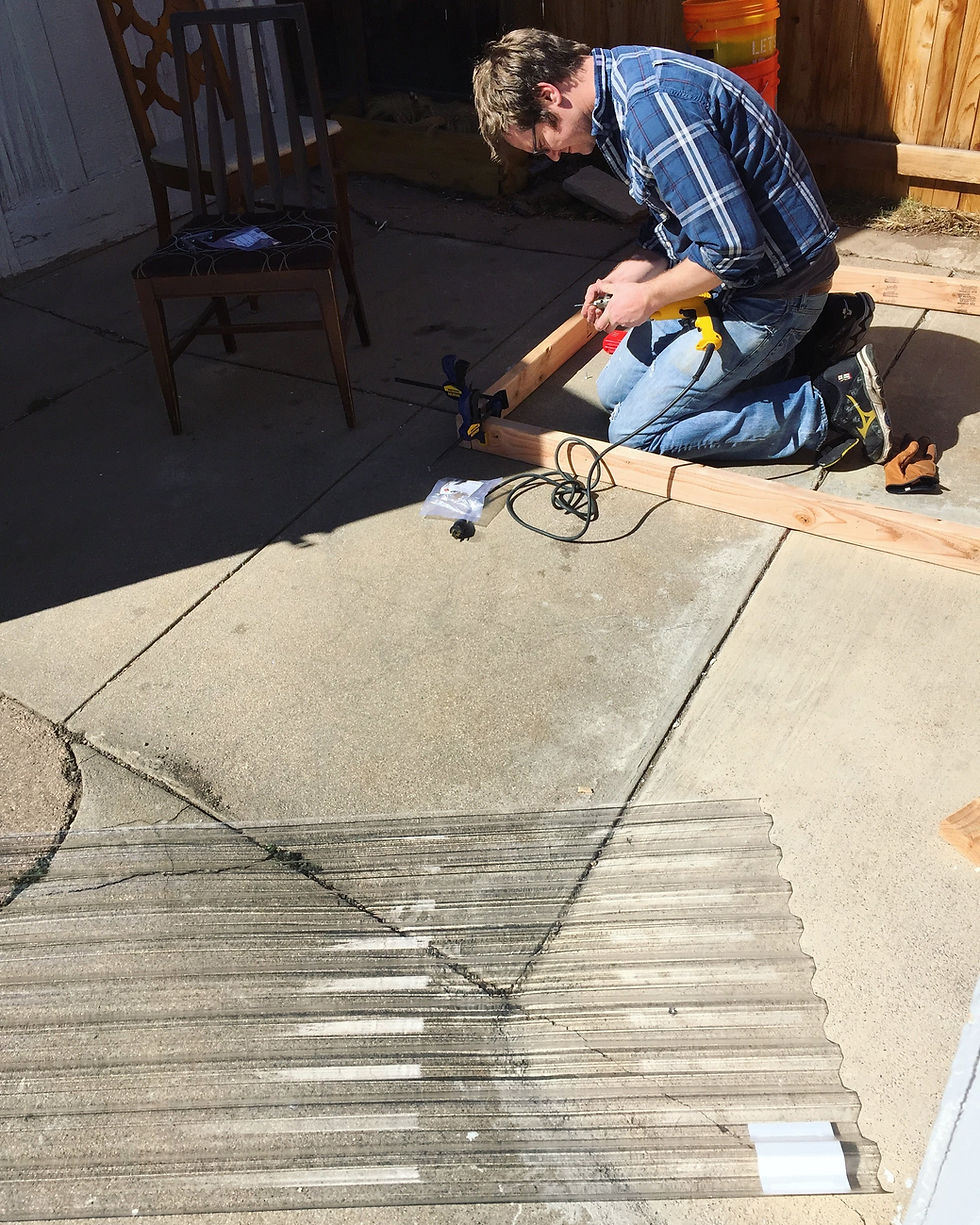
I've been eager to take advantage of the ample sunshine in Colorado with a cold frame and recently persuaded my woodworking husband to design and build a portable cold frame we can fit over a portion of one garden bed. This spring I wanted to start peas, lettuce, and collard greens earlier outside without obsessing over snowfall.
If you Google cold frame plans, you’ll have no problem finding a structure that can work with your specific gardening needs. Cameron relied on a few plans to get the materials he needed and then developed a cold frame plan to work with our garden bed size and would allow us to stack more layers of frame if we ever plant for larger vegetables during Colorado’s shoulder seasons (March-April and October-November).
Cold Frame Materials
For a long-lasting, cost-effective frame:
Invest in a rot-resistant material like cedar or redwood for the structure
Settle for corrugated plastic that is transparent or translucent for the “windows”.
Cold Frame Technique
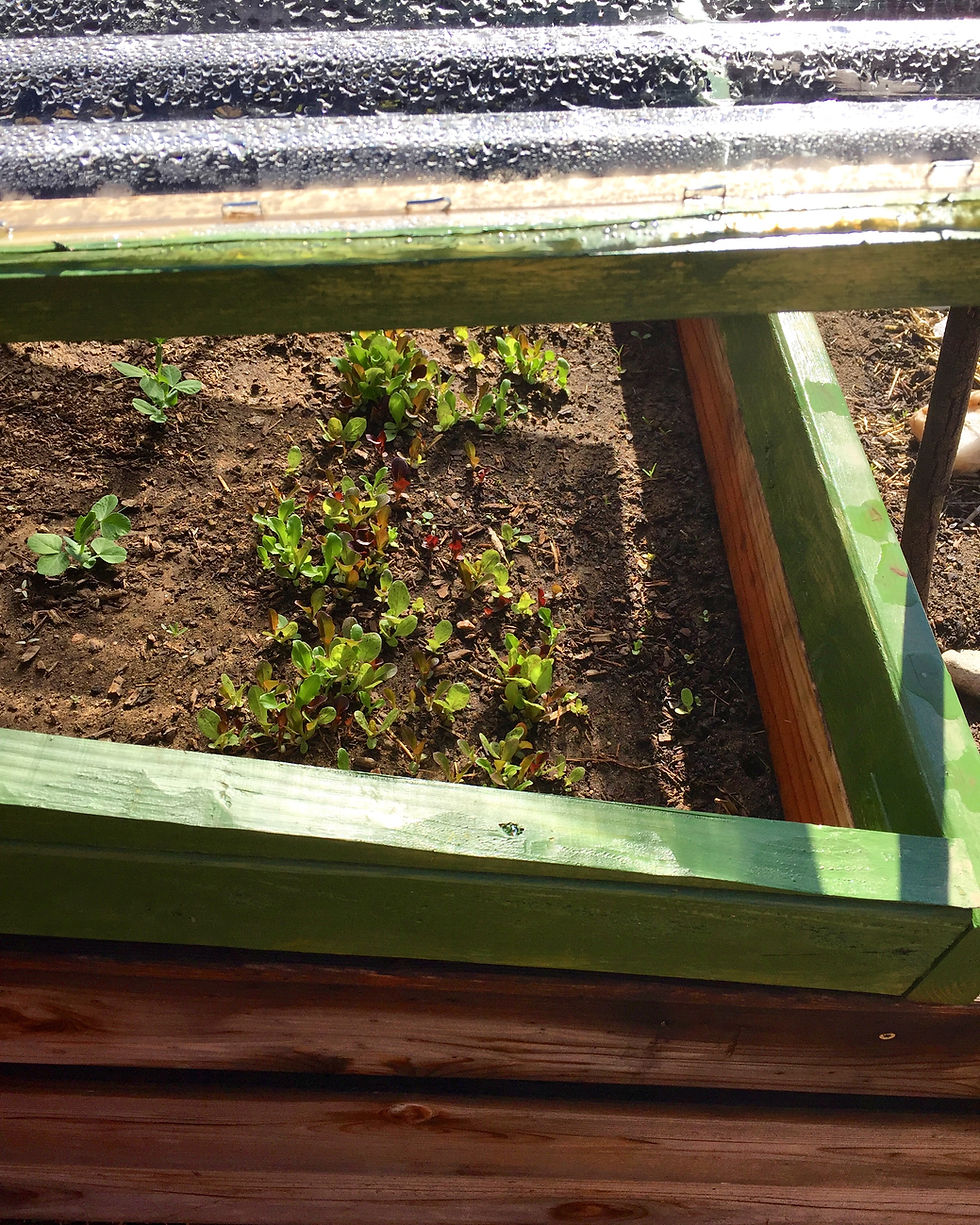
As you can see from the finished cold frame pictured below, Cameron built it at an angle. We also placed it where the windows will receive maximum southern exposure to increase warmth within the structure. Ours is not 100% sealed; this "draft" allows is a small amount airflow even when the windowed doors are shut.
Cold frame is constructed and placed over the garden bed before finished. Image by Gwynne Middleton Cameron stands by his cold frame construction in garden. Image by Gwynne Middleton.
However, when the weather folks forecast a warm day (65 degrees F or more), I prop open the windows to get more air flowing through the structure. By increasing airflow, you prevent the space from growing too warm inside, which can stress and potentially fry the tender young plants you're trying to cultivate.
Preparing the Cold Frame Garden Bed for Seed Starting
We amended the garden bed soil with store-bought mushroom compost (our backyard compost bins are in process now and hopefully will be cooking soon). Then, I gave the loosened soil a quick watering and sowed seeds according to packet instructions. After gently patting down soil over the seeds, I added a little more water, and arranged the cold frame over the area.
Most of the seeds germinated without fail within their sprouting window, and I now have a patch of mesclun lettuce, as well as several pea plants and collard greens. A couple of days ago I thinned the collard seedlings, and they quickly have taken off with their growth. Goes to show that seedlings need enough space to spread their roots and soak up the soil’s nutrients to thrive.
Digging in to Cold Frame Gardening
For more information on the benefits of cold frames for gardening, check out this informative article on Rodale’s Organic Life. Or, if you’re excited to get going on your own cold frame construction, Google away and search on Pinterest for neat and practical designs.
I found many cold frame designs that reuse old windows in their frames. If you go this route, please ensure the window frames aren’t covered in lead-based paint. You can do a quick lead pain test with a kit. There's no sense in growing food without chemicals only to have them be exposed to lead.
Finally, if you’re interested in other methods to protect your garden from extreme weather or pests, stay tuned for practical, and sometimes silly-looking, ideas that have worked for us in the garden. Happy gardening.


