How to Start Home Composting and Build Your Own DIY Compost Sifter

Not long after diving into Let it Rot! The Gardener’s Guide to Composting, I learned that my love of fermented foods is not unlike my love for creating home compost. Both rely on aerobic bacteria’s labor to produce a successful end product. In the case of compost, success is marked by organic materials so well decomposed that they have broken down into what looks like rich, dark soil.
For those unfamiliar with the science behind composting, Kelly Smith explains in How to Build, Maintain, and Use a Compost System that it’s really just a matter of “fungi and microorganisms in the soil breaking down organic materials into their basic components, making those basic components available to the root systems of living things.”
What is Home Composting?
An effective home composting system is a contained space with a concentrated amount of compostable materials that encourages rapid growth of bacteria to break down the materials. None of the compost piles I’ve made and tended over the years have needed soil as a starter, and they all eventually have decomposed into the nutrient-rich soil amendment that replenishes what the plants and vegetables I grow in the garden have siphoned from the soil.
Why Compost at Home?
Home composting has been part of my life since my early 20s in Portland when I learned that approximately 25% of our country’s municipal solid waste is comprised of yard debris and food scraps. If composted, that waste is diverted from landfills where it will rot through anaerobic decomposition.
Anearobic decomposition releases an ungodly amount of methane into the atmosphere, which does similar ecological damage as our overabundant greenhouse gas carbon dioxide. By composting for home garden use, you get the benefit of a super soil amendment that provides your plants with crucial nutrients to thrive without using commercial fertilizers.
When I’ve lived on property with gardening potential, I’ve reused plant-based (and egg shell) kitchen scraps and yard debris to create a compost pile or fill a compost bin. However slowly, the scraps eventually become usable compost, and I mix it into existing soil and then plant seeds or transplants.
Though I’ve been home composting for over 15 years now, each time I open a book on composting, I’m quickly reminded how unsophisticated my “food waste to organic soil amendment” techniques are. I am far from a compost scientist, but below you’ll find the four composting basics I’ve relied on to make successful compost for my garden year after year.
Composting Basics # 1: Choose the Right “Pile” Style for Your Property.
I’ve composted with a hole in the ground, an open pile, a chicken wire and pallet set-up, and an enclosed tumbler. Now that I live in a neighborhood with pests (I’m deadeying you, crooked-tail squirrel), I’ve settled on a container tumbler bin system. They are not cheap, but they prevent squirrels and birds from making off with fresh scraps, and I like its ability to blend into our yard. I also like that I’m in no way inconveniencing nearby neighbors with any potential odors that could emanate from a food scrap-heavy pile.
Composting Basics # 2: Monitor Carbon and Nitrogen Ingredients for a Healthy Composting System.
When carbon and nitrogen compostable sources are in good proportion and you have adequate water and air, your compost pile will thrive. My tumbler compost tend to take longer to break down because they usually get one big helping of brown materials (i.e., yard debris) each autumn. Otherwise, I just add plant and egg shell food scraps to the mix and let the compost environment do its work. It’s so dry in Colorado that the tumbler pile has never gotten too wet from food scraps to do its work, but I need to be mindful that the materials I add work effectively together to break down into compost.
Best practices for an active compost pile include:
Carbon-rich items “brown” materials (tree leaves and straw) to serve as energy for the microorganisms in your pile
Nitrogen-rich “green” materials (manure, fertilizer-free grass clippings, and green vegetation like kitchen vegetable scraps) to provide the protein that the microorganisms use to break down the carbon-rich foods
Some moisture (about 45%) to help with decomposition
Some oxygen to help aerobic bacteria survive and thrive in the controlled environment you’ve created
When aerobic bacteria thrive in the compost pile, they produce a lot of energy (and heat), which helps them multiply and break down the brown and green materials more quickly. And the kicker? The aerobic bacteria excrete essential plant nutrients like nitrogen, phosphorus, and magnesium.
Composting Basics # 3: The Smaller Your Compostable Materials, the Faster Your Pile Will Produce Finished Compost.
I went wild with recycling newspaper last autumn by shredding it and tossing it in my pile. Unfortunately, I didn’t shred it small enough; it wound up globbing up the pile. Also, we are not always the best at cutting up kitchen scraps into small pieces. They will eventually decompose, but it takes a lot longer for fungi and bacteria to make their way through bigger material. Lesson learned.
Composting Basics # 4: Any Time Is a Good Time to Start Composting.
Heat helps organic material rot (by helping the microorganisms grow), so summer can be an ideal time to get your pile started. This chilly spring I decided to toss a few cups of dried cow manure into my compost tumblers because they had a lot of non-decomposed leaves and newspaper, and the materials in each bin are breaking down much faster.
Composting Digest: Long Story Short
Decide on your compost bin style.
Combine green and brown materials along with water.
Turn the pile about once a week to give your aerobic bacteria the oxygen they need to proliferate.
Take time upfront to make your composting materials small enough to encourage rapid decomposition (1- to 2-inch pieces are ideal)
Start your composting adventure today.
If you’re interested in learning more about home composting, this article gives a more nuanced but still concise explanation of the science behind composting. If you have more time and want to dig deeper, Kelly Smith’s How to Build, Maintain, and Use a Compost System has been a great resource for me for our home composting process and for this post.
For those of you with an active compost pile who want to sift out the unfinished materials from the finished compost so you can start using your soil amendment in the garden. Check out Practical Projects for Self-sufficency: DIY Projects to Get Your Self-reliant Lifestyle Started for their easy-to-follow instructions on how to construct a soil/compost sifter.
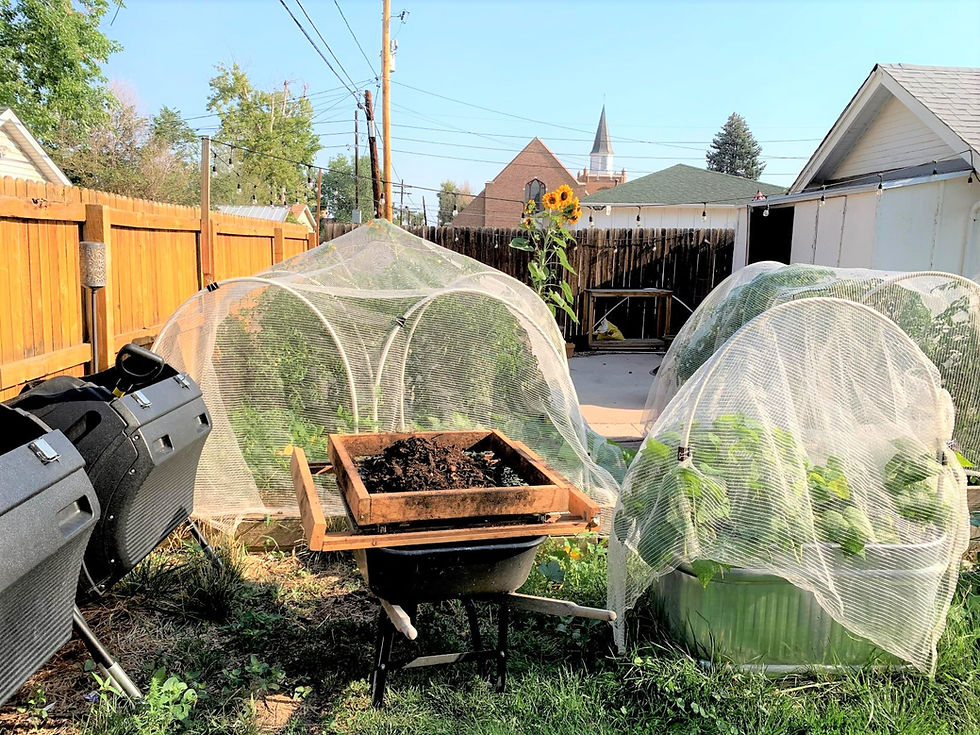
Cameron was able to construct our compost sifter within an hour after picking up supplies from the hardware store. We’ve used it successfully the past two weekends to get fluffy finished compost for the vegetable and flower beds on our property.
Click on the photos below to learn more about our composting system and the sifter Cameron assembled.
garden debris and kitchen scraps together inside a compost tumbler compost at mid-point in decomposition wooden compost filter on top of wheelbarrow in garden Cameron tests out his compost screen project. compost after it's been filtered through the compost sifter screen.